The Kouza and the Fountana
Gender, Coloniality, and the Afterlives of Water in Cyprus
DOI:
https://doi.org/10.14198/UOU.2025.10.10Abstract
This article traces the life of water infrastructures in Cyprus through the kouza and the fountana, read as details where materiality, everyday life, and power converge. From women balancing clay jars at the village well to the cast-concrete fountains of British welfare schemes, these objects function as both technical artefacts and social mediators. Their red clay, porosity, sweating surfaces, lace coverings, and concrete inscriptions materialize shifting regimes of labour, gendered sociability, and imperial authority. In colonial photography, wells were framed as sites of “vulgar gossip,” women’s gestures aestheticized as frivolous chatter or “living statues.” In mid-twentieth-century Cyprus, fountains stamped with royal initials monumentalized “just enough” progress, embedding empire in everyday acts of drinking and pausing.
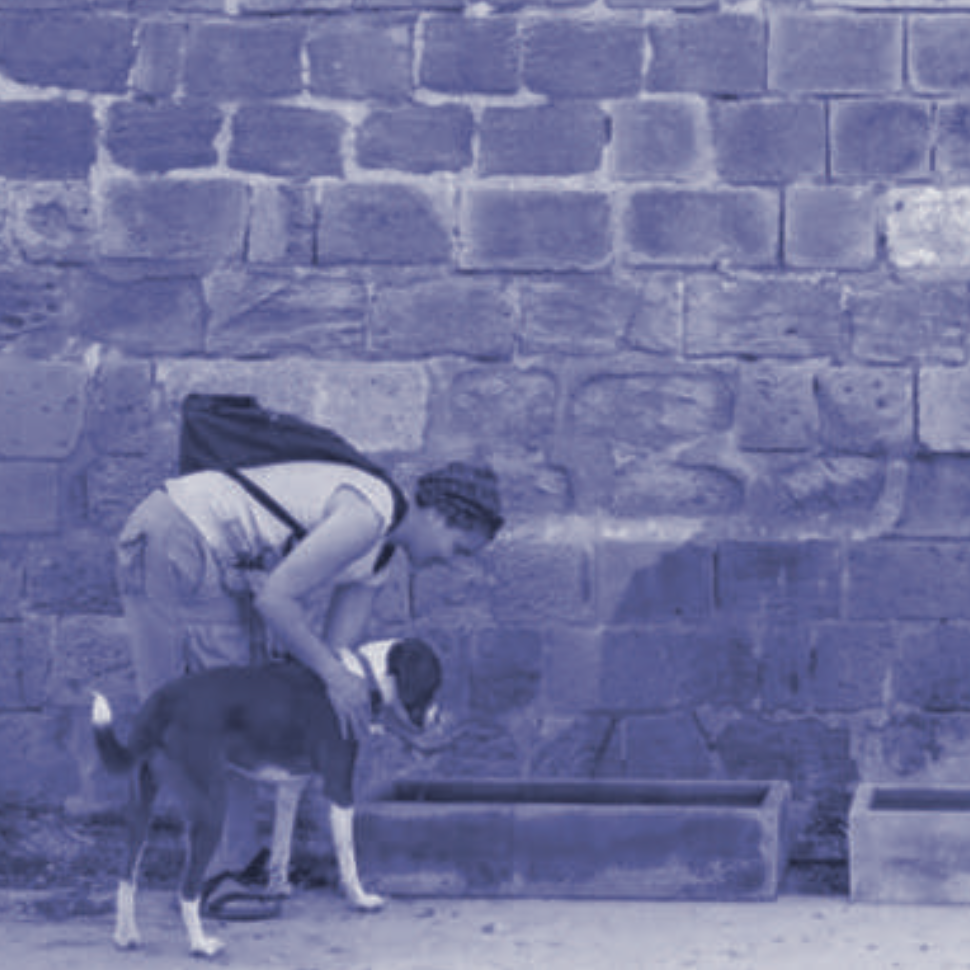
The article approaches drawing not as architectural detailing but as a mode of slow observation and testimony: tracing, through speculative narrative, archival images, and more-than-human perspectives, the micro-materialities of water, clay, concrete, and care. Short vignettes act as textual drawings, responding to archival silences without assuming the voices of unnamed women, while photographs and contemporary artwork function as drawn records of lived infrastructures. In this sense, the work resonates with Kyriaki Costa’s Her/Its Water, which catalogues fountains as lived archives, and PASHIAS’ KUZA, which collapses vessel and body in a performance of continuity. Together, these histories and practices reposition the kouza and the fountana not as static relics but as porous participants in everyday life — seeds of memory, commons, and care.
Downloads
Downloads
Published
How to Cite
Issue
Section
License
Copyright (c) 2025 Stavroula Michael

This work is licensed under a Creative Commons Attribution 4.0 International License.
The authors keep their rights upon their work, although they transfer, in a non-exclusive way, the rights of exploitation (reproduction, publication, distribution, public dissemination and presentation) to the Journal. The authors are, therefore, free to enter additional, separate contracts for the non-exclusive distribution of the version of the work published in the Journal (for instance, by hosting in an institutional repository or publication in a book), provided credit is given that the work was initially published in this journal. The works are published under a Creative Commons Attribution 4.0 (CC BY 4.0) license.