
Detailing Time
The Architectural Drawing as a Temporal and Speculative Construct
DOI:
https://doi.org/10.14198/UOU.2025.10.12Abstract
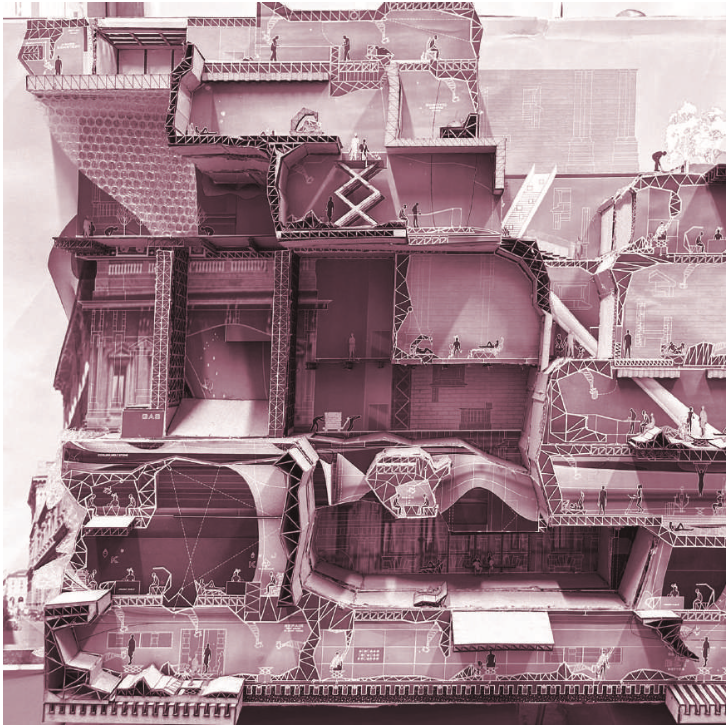
This paper examines the detail drawing as a research tool for exploring speculative visions of future life, situating it as both a pedagogical and conceptual instrument for architectural inquiry. Drawing on a series of design studio and construction courses led by the author, the discussion traces how the detail evolves from a technical exercise into a lens for investigating material, temporal, and social transformation. Through references to writings from Mostafavi and Leatherbarrow, the Smithsons, Peter Salter, and Cedric Price, the paper frames the detail as a field of negotiation between design intent, material agency, and lived experience. Within this framework, drawing is approached not as a fixed representation but as a performative act; an anticipatory process that reveals architecture’s mutable continuity with time and use. The case study “Tech(no)-Cosmos” extends this approach, envisioning a technologically integrated future where architecture, body, and machine co-evolve. By tracing the micro-temporalities embedded in constructional and representational processes, the paper argues for an expanded understanding of detail as an active, temporal construct. Ultimately, it advocates an architecture that embraces indeterminacy and transformation; an architecture that is, in the fullest sense, alive.
Downloads
Downloads
Published
How to Cite
Issue
Section
License
Copyright (c) 2025 Markella Menikou

This work is licensed under a Creative Commons Attribution 4.0 International License.
The authors keep their rights upon their work, although they transfer, in a non-exclusive way, the rights of exploitation (reproduction, publication, distribution, public dissemination and presentation) to the Journal. The authors are, therefore, free to enter additional, separate contracts for the non-exclusive distribution of the version of the work published in the Journal (for instance, by hosting in an institutional repository or publication in a book), provided credit is given that the work was initially published in this journal. The works are published under a Creative Commons Attribution 4.0 (CC BY 4.0) license.