An Archaeology of the Affective Commons
Summoning the Border in Motion
DOI:
https://doi.org/10.14198/UOU.2025.10.04Abstract
An Archaeology of the Commons stages an encounter between two systems: the commons – as place and practice – and archaeology understood as materially grounded storytelling. Following Lauren Berlant’s invitation to attend to detail, both may be treated as affective infrastructures that become legible through instruments of urban governance: title plans, parcels, cadastral surveys, easements, and public works. The commons are most intensely performed at their boundary where unlike a border, they become dynamic, constitutive processes through which social, ecological and political relations are continually remade.
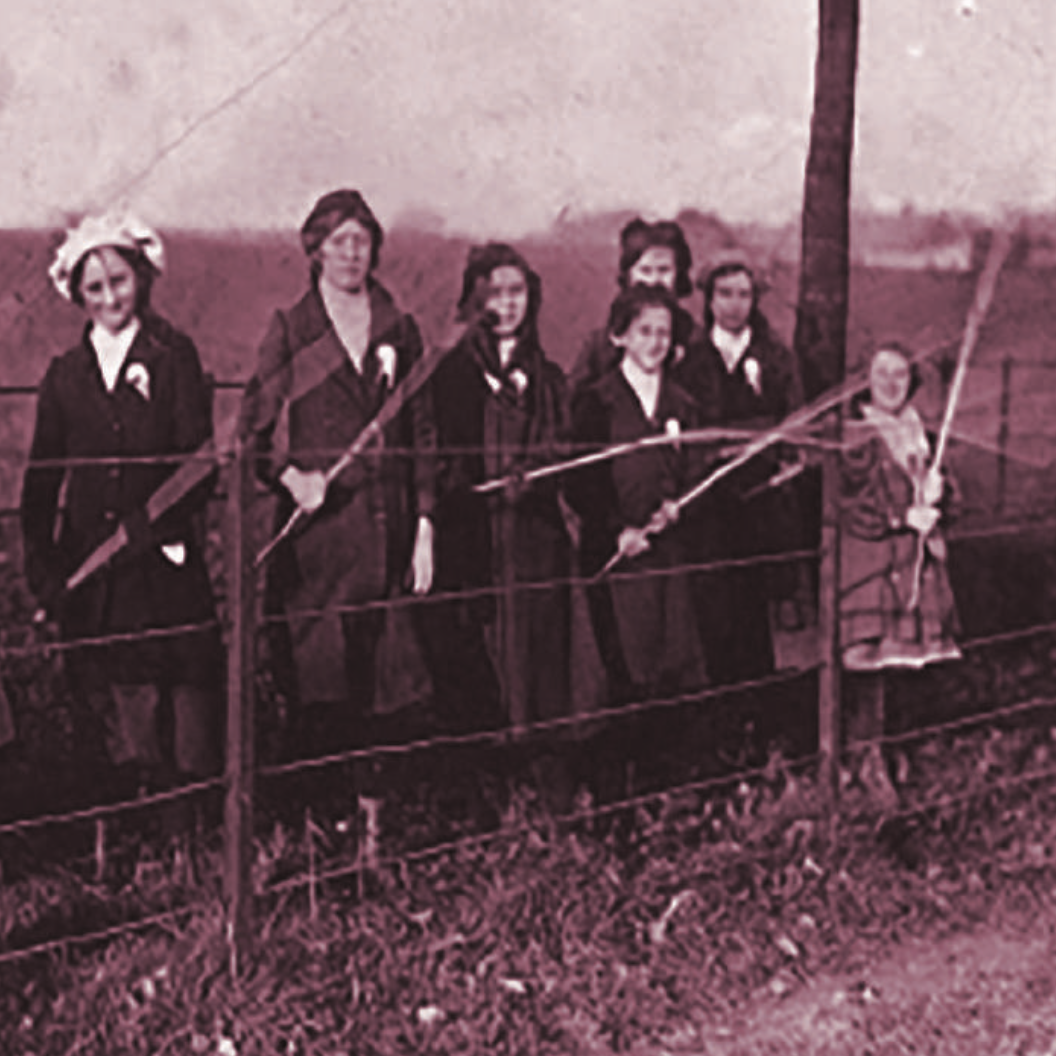
Working with Melbourne’s vestigial town common, I describe a re-enactment of “beating the bounds” – a reactivation of a dormant colonial edge – not as a revenant to be feared but as material to be reworked. Here archaeology-as-commoning is developed as a performative method – walking, drawing, filming and incantation – in order to reanimate erased sites and redistribute their narratives into shared cultural life. Attention to micro-details – fence lines, survey coordinates, species names, culverts and benchmark stones – guides a practice that both records and makes space.
Here as well, methodologically, cartography, technical drawing, field inscription and film are gathered into critical dialogue. Maps are read as cultural instruments that stabilise abstraction while insisting on generative frictions between representation and lived ground. Through slow, materially attentive inscription and speech, the work exposes how colonial spatial logics persist in urban seams – offset grids, easements, utility corridors, “paper roads” – and how they can be unsettled.
The contribution is threefold: a reframing of commons boundaries as infrastructures of relation; a method for their excavation through performative, multi-scalar practices; and a demonstration that detailed attention can open new imaginaries for urban common land.
Downloads
Downloads
Published
How to Cite
Issue
Section
License
Copyright (c) 2025 Alessandro Zambelli

This work is licensed under a Creative Commons Attribution 4.0 International License.
The authors keep their rights upon their work, although they transfer, in a non-exclusive way, the rights of exploitation (reproduction, publication, distribution, public dissemination and presentation) to the Journal. The authors are, therefore, free to enter additional, separate contracts for the non-exclusive distribution of the version of the work published in the Journal (for instance, by hosting in an institutional repository or publication in a book), provided credit is given that the work was initially published in this journal. The works are published under a Creative Commons Attribution 4.0 (CC BY 4.0) license.